PINN Forum Focuses on Compassionate System Change
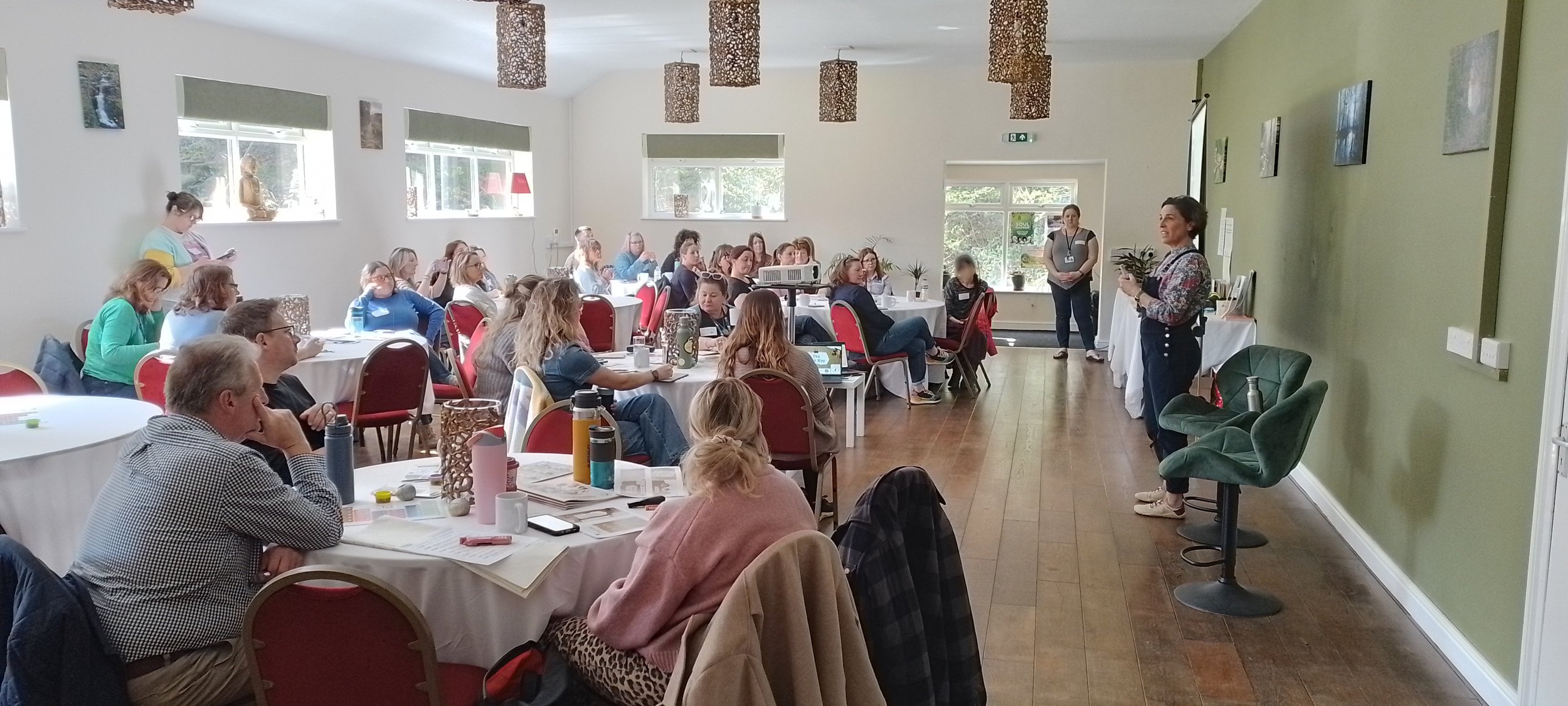
Professionals from across Northern Devon’s health and community sector came together this April for a reflective and thought-provoking session focused on trauma-informed approaches and the challenges of delivering meaningful system change. The Northern Devon Forum for Practitioners Inclusive of all Neurotypes (PINN Forum) “a unique space that facilitates collaboration, resource sharing, and the development of innovative strategies to enhance the support available for autistic people and those with other neurodivergent needs.” (WayMakers).
Matt Merriam, Community Mental Health Development Lead for Exeter, East and Mid Devon at the Devon Mental Health Alliance (DMHA), played a central role in the session, joining Natascha Windheuser from CoLab to lead discussions at the PINN Forum. The event was hosted by Alex Kelly from Waymakers, bringing together practitioners committed to improving neuro-affirming and trauma-informed practice across the region.
Representing the DMHA, Matt Merriam helped guide the session, introducing participants to the TICA Way (Trauma-Informed Community Approach) and encouraging open dialogue about the realities of working within complex systems. His work across Exeter, East and Mid Devon focuses on strengthening community-led approaches to mental health, making this an important opportunity to connect, share learnings and understand best practice from across Devon.
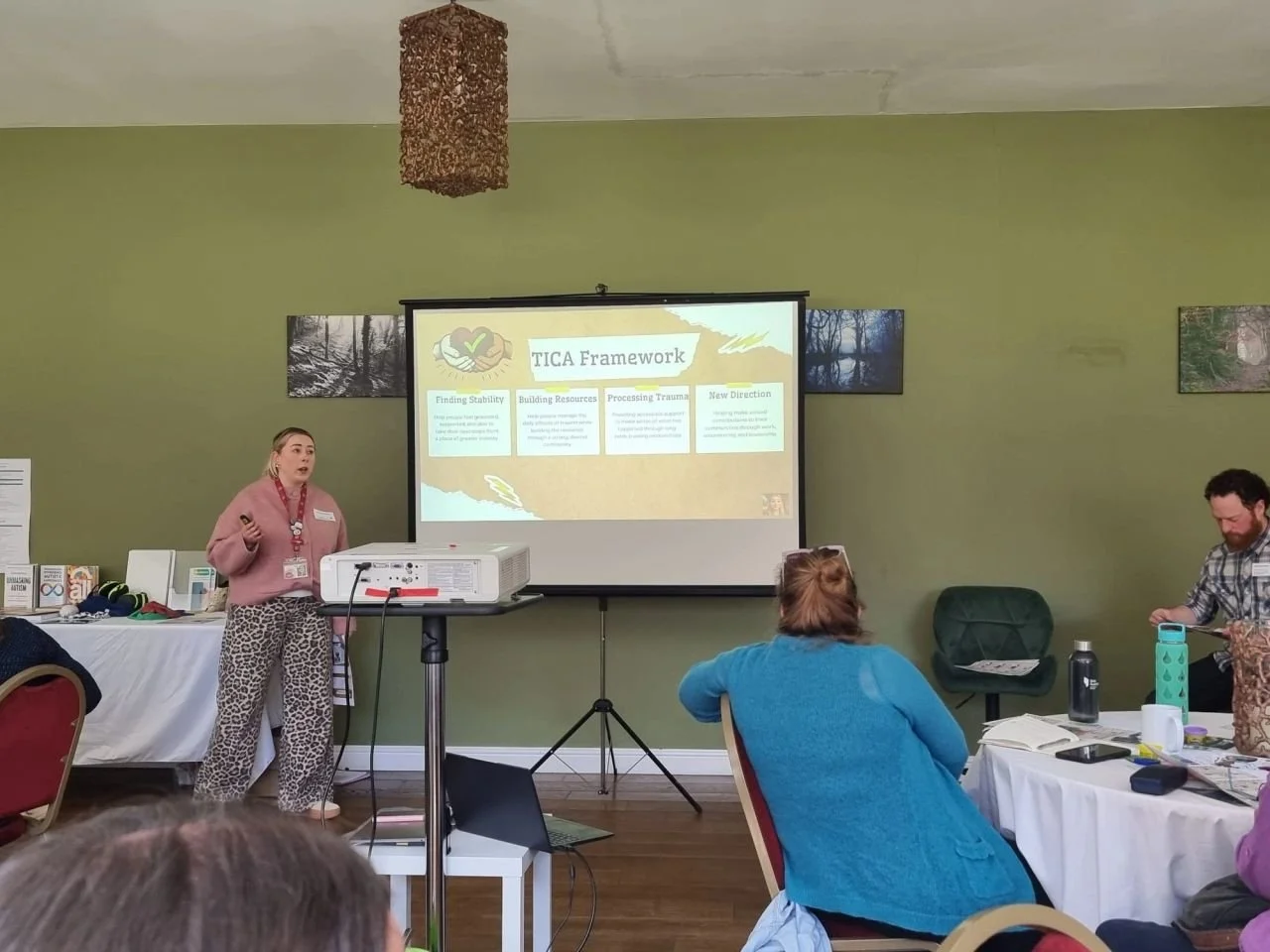
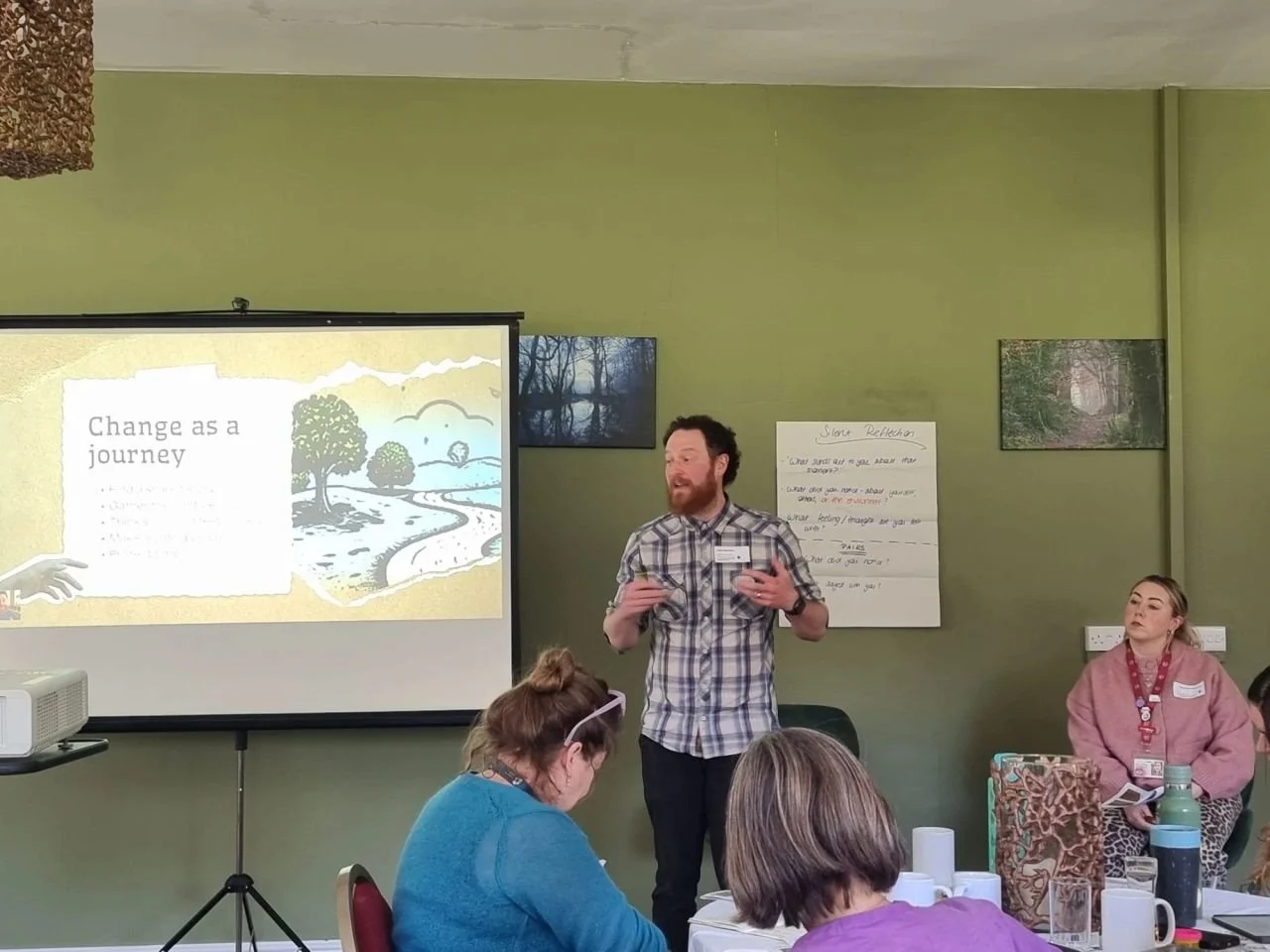
Natascha Windheuser, representing CoLab, one of DMHA’s key partners, brought valuable frontline insight, grounding the conversation in lived experience and service delivery. Together, Matt and Natascha created a collaborative space that balanced theory with practice, helping attendees reflect on both challenges and opportunities.
The session was hosted by The Grow Forward Project, offering a calm and restorative environment that supported reflection and connection. Combined with the work of Alex Kelly and the Waymakers team, the setting reinforced the importance of creating spaces where people feel safe to think, share, and learn together.
A key theme that emerged throughout the morning was the difficulty of embedding better practice within systems that are themselves under pressure. Participants repeatedly returned to the challenge of working within “dysregulated systems”— organisations that, due to sustained stress, struggle to function effectively.
In these environments, it was noted, the ability to plan and think clearly is often replaced by constant firefighting. Collaboration can become fractured, with siloed working and blame cultures emerging. Opportunities for learning diminish, as defensiveness and risk-aversion take hold, and even well-intentioned change efforts can stall.
Rather than focusing solely on strategy or restructuring, Matt introduced a different perspective—one that recognises the need for systems themselves to recover.
The session explored a simple but powerful idea: if organisations are to implement lasting change, they must first be supported to regain a sense of safety, connection, and empowerment.
To support this, Matt and Natascha introduced six practical “recovery tools” grounded in the TICA Way. These included building a shared understanding of trauma and stress, developing a language of strengths to better recognise both individual and collective capacity, and using small, adaptable tests to support learning and change.
Participants also explored the importance of regular reflective practice—creating space to consider where safety, power, and connection may be challenged within teams. Alongside this, the role of trust-building and compassionate leadership was highlighted as essential to creating healthier, more resilient systems.
The session encouraged attendees to look inward, considering how organisational dysregulation may be affecting their own work and what steps could be taken to address it. By reframing challenges through a trauma-informed lens, many left with a renewed sense of how change might be approached more effectively.
This event reflects the Devon Mental Health Alliance’s ongoing commitment to supporting organisations across Devon to embed trauma-informed values and approaches. Through partnerships with organisations such as CoLab and community groups like Waymakers, DMHA’s work continues to strengthen collaborative, community-led responses to mental health and wellbeing.
If you would be interested in Devon Mental Health Alliance working with you around trauma-informed values, trauma awareness, and recovering from organisational dysregulation – get in touch with Matt for a conversation.
Contact - Matt.merriam@colabexeter.org.uk